One underlying process, many diseases
After early adulthood, a person’s risk of dying roughly doubles every eight years. Most of that rising risk comes from a handful of diseases that share a common driver: the body’s accumulated wear.
Curing any single disease of old age adds surprisingly little to life expectancy, because the others are waiting. Eliminating all cancer, for example, would add only a few years on average. Slowing the underlying process is a different proposition: it would push back heart disease, cancer, dementia and frailty together. That is the promise of geroscience, and why a modest effect on aging could be worth more than a large effect on one disease.
The weakest link is the measuring stick
Biology has produced promising targets. The steps between a target and an approved medicine are where the field stalls.
The biology of aging
Damage and dysregulation that accumulate with age: in how cells sense nutrients, repair DNA, clear waste, keep their identity and remove damaged neighbours.
- Measure
- Mechanisms with causal evidence in animals
- Failure boundary
- Many changes accompany aging without causing it; targeting a bystander does nothing.
Where the frontier moves
Experiments that reverse a single mechanism and test whether many age-related diseases improve at once.
Interventions
Drugs, diets and therapies aimed at those mechanisms: rapamycin and nutrient sensing, metformin, senolytics that clear old cells, and partial reprogramming of cell identity.
- Measure
- Lifespan and healthspan gains in animals
- Failure boundary
- Effects in short-lived mice often shrink or vanish in longer-lived species.
Where the frontier moves
Testing in dogs and other long-lived animals before people.
Biomarkers
Measurements, such as DNA methylation clocks, that estimate biological age or its pace and might show an effect within months.
- Measure
- Prediction of disease and death · response to interventions
- Failure boundary
- No biomarker of aging is yet accepted as a substitute for real health outcomes.
Where the frontier moves
Validating second-generation clocks like DunedinPACE and GrimAge against hard outcomes in trials.
Clinical trials
Randomised trials that show fewer diseases or deaths in people taking the intervention.
- Measure
- Participants · years · cost per trial
- Failure boundary
- Without a biomarker endpoint, trials must wait for rare events and become huge.
Where the frontier moves
Composite endpoints of several age-related diseases, and high-risk older volunteers who have events sooner.
Regulation
Medicines are approved to treat specific diseases. Aging itself is not a recognised indication.
- Measure
- Accepted indications and endpoints
- Failure boundary
- A drug that delays every disease a little may not show enough effect on any single one.
Where the frontier moves
Approval pathways built around multiple age-related conditions at once, as the TAME trial proposed.
Access and safety
A drug taken by healthy people for decades must be extremely safe and cheap.
- Measure
- Side-effect rate over years · cost per year
- Failure boundary
- Rapamycin suppresses parts of the immune system at high doses; tolerance for harm in healthy people is low.
Where the frontier moves
Lower or intermittent doses and off-patent drugs that are already well understood.
Rare events need huge trials
A trial proves a drug works by counting events, such as heart attacks or deaths, in treated and untreated groups. The rarer the events and the smaller the effect, the more people it takes.
To show with reasonable confidence that a drug cuts deaths by 10%, a trial needs roughly 2,800 deaths. Healthy 65-year-olds die at around 2% a year, so collecting those deaths takes about 30,000 people followed for five years (Derived). The TAME trial of metformin tried to solve this by counting a combination of age-related diseases rather than death alone, bringing its planned size down to about 3,000 people aged 65 to 79. Even that design has struggled for years to raise full funding. A sufficiently validated surrogate could allow shorter trials, but their size would depend on marker variability and treatment effect; hundreds of participants is a possibility, not a result of the survival model. That is why the measurement problem sits at the centre of the field.
A younger blood result is one rung on the evidence ladder
The strongest animal evidence comes from interventions tested in genetically diverse mice at multiple sites. Even there, effects depend on sex and dose: acarbose’s large male benefit is much smaller in females. That variation is part of the result, not statistical clutter. Moving from mice to people adds different genetics, environments, disease histories and decades of potential drug exposure. A plausible mechanism and longer mouse lifespan establish a reason to test an intervention; they do not establish a safe preventive treatment for humans. NIA’s Interventions Testing Program; NIA’s acarbose findings
CALERIE’s calorie-restriction intervention changed DunedinPACE by about 2–3%, while the study found no significant effect on the PhenoAge or GrimAge estimates. The analysis used blood DNA from 197 participants in a parent trial that randomized 220 adults. The distinction matters because clocks measure different aspects of aging. The often-quoted 10–15% mortality implication comes from associations in other cohorts, not deaths prevented in CALERIE. A valid surrogate would need to show that treatment-induced changes predict improvements in outcomes, rather than merely that healthier people tend to have better readings. CALERIE biomarker analysis, Nature Aging, 2023
Human lifespan extension has not been demonstrated by these results. A biomarker can help select candidates before it is sufficiently validated to replace a clinical endpoint.
How big must a trial be to prove a drug slows aging?
Slowing aging should show up as fewer deaths and fewer age-related diseases. Those events are rare in any one year, so proving a modest effect takes enormous trials, unless the endpoint changes.
To detect a 10% lower event rate with 80% power
- Events needed
- 2,828
- Share of controls with an event
- 10% over 5 years
- Person-years of follow-up
- 154,565
Presets are illustrative. Death at around age 65 occurs at roughly 1–2% a year; a composite of heart disease, cancer, dementia and death occurs more often; selecting frail or high-risk volunteers raises the rate further. The dog preset approximates the high annual mortality of senior large dogs, which is why a lifespan trial like Loyal’s can enrol about 1,300 animals rather than tens of thousands of people.
Calculation & assumptions
Events needed = 4 × (1.96 + 0.84)² ÷ (ln hazard ratio)², Schoenfeld’s approximation for a two-arm trial with equal allocation, 5% two-sided significance and 80% power. Each arm’s probability of an event over the follow-up assumes a constant annual hazard. Participants = events ÷ the average event probability across both arms. Excluded: dropouts, staggered enrolment, competing risks and multiple endpoints, all of which increase the size of a real trial.
Hints in people, proof in mice, a test in dogs
Human evidence is indirect but encouraging. A major near-term lifespan test is in dogs, alongside ongoing human studies.
Three kinds of human evidence
None of these proves a drug slows aging in general. Calorie restriction is hard to sustain; semaglutide was tested in people with a specific disease; reprogramming is being tested in the eye, where it can be switched on and off and its effects seen directly. Together they suggest the biology that works in animals is not irrelevant to people.
Why the dog trial matters
Dogs live in our homes, eat similar diets and develop many of the same diseases, but their lives run several times faster. Loyal’s STAY trial is following about 1,300 senior dogs across some 70 veterinary clinics. Because older large dogs die at high annual rates, a lifespan trial is feasible with hundreds of animals rather than tens of thousands of people. Loyal reports FDA acceptance of its reasonable-expectation-of-effectiveness and target-animal-safety application sections; these milestones are not a completed efficacy trial or a final approval. If the dogs that take it live measurably longer and healthier lives, it would be the first drug approved to extend lifespan in any species, and a powerful argument for human trials.
Smaller trials require a better endpoint, a larger effect, or a higher-risk population
The calculator’s mortality example needs about 2,800 deaths and 31,000 participants to detect a 10% hazard reduction over five years, under its simplified assumptions. Counting several age-related diseases raises the event rate and can shrink the trial. Recruiting frailer volunteers does the same. Neither shortcut is free: composite components can differ in importance and treatment response, and results in high-risk patients may not generalize to healthy adults. A biomarker-based trial has separate arithmetic, based on marker variability and treatment effect; the survival model cannot calculate its size.
Dogs provide a faster real-world test of a longevity intervention, but regulatory progress and lifespan proof are separate. Loyal reports FDA acceptance of the reasonable-expectation-of-effectiveness and target-animal-safety sections for LOY-002, and full enrollment of its STAY efficacy trial. FDA veterinary conditional approval permits marketing before the full effectiveness standard has been demonstrated, subject to other requirements. Even a conditional approval would therefore leave an important question for the randomized trial: do treated dogs live longer and remain healthier? A positive canine result would strengthen the case for human studies, without determining their effect size or safety. Loyal’s February 2026 status report; FDA’s explanation of conditional approval
Participant counts are Derived. Company application milestones are reported status; no completed STAY efficacy result is asserted here. Healthspan needs functional and disease outcomes as well as survival.
Validate the clocks
A surrogate validated against treatment effects on clinical outcomes could shorten trials. Sample size would still depend on marker variability and the expected effect.
Test in long-lived animals first
Dogs share our homes, diets and diseases and age several times faster, which makes them a fast, relevant test.
Use drugs already on the shelf
Rapamycin, metformin, acarbose and GLP-1 drugs are well characterised. Off-patent drugs need public or philanthropic funding to be tested.
Measure healthspan, not just lifespan
The goal is more years in good health. Trials should track function, frailty and disease-free years, not only survival.
Give regulators an endpoint
A route to approval for delaying several age-related diseases together would make the field investable.
Be honest about the clinic
Most of today’s anti-aging products and clinics sell hope ahead of evidence. Credibility depends on randomised trials.
Who is building what
Drug developers, trials and the funders and consortia building the field’s evidence base. Search the record, or filter by role.
LoyalLOY-002A daily pill aimed at metabolic drivers of aging in senior dogs
- Reported evidence
- FDA accepted its reasonable expectation of effectiveness in 2025 and its target-animal safety section in January 2026; the STAY trial has enrolled about 1,300 dogs.
- Announced next step
- Conditional veterinary approval, then full approval when STAY reads out.
- Unresolved risk
- The pivotal trial must show a real lifespan or health benefit; dog results may not translate to people.
Life BiosciencesER-100Partial epigenetic reprogramming with three Yamanaka factors, switched on by doxycycline
- Reported evidence
- FDA cleared the first human trial of partial reprogramming in January 2026; the first patient was dosed in June 2026 for optic nerve disease.
- Announced next step
- Safety and vision results in glaucoma and NAION.
- Unresolved risk
- Reprogramming factors carry theoretical cancer risk; the eye is a contained first test, not a whole-body therapy.
Altos LabsCellular rejuvenation researchLarge-scale research into restoring cell health and resilience, including reprogramming
- Reported evidence
- Launched in 2022 with about $3 billion in funding and leading academic scientists.
- Announced next step
- Therapies that reverse disease by rejuvenating cells.
- Unresolved risk
- Long research timelines before any human product.
National Institute on AgingInterventions Testing ProgramRigorous, three-site testing of candidate drugs in genetically diverse mice
- Reported evidence
- Established that rapamycin, acarbose, 17-α-estradiol and others extend median mouse lifespan.
- Announced next step
- Testing new candidates and combinations.
- Unresolved risk
- Mouse results often shrink in longer-lived species.
AFAR / Albert Einstein College of MedicineTAME trialMetformin tested against a composite of age-related diseases in about 3,000 people aged 65–79
- Reported evidence
- Designed with FDA input to use existing disease endpoints; full funding has been a long-standing obstacle.
- Announced next step
- A regulatory template for drugs that target aging.
- Unresolved risk
- Metformin’s effect may be small; the trial has struggled to start at full scale.
Biomarkers of Aging ConsortiumBiomarker standardsAbout 200 researchers setting standards for validating biomarkers of aging
- Reported evidence
- Published guidance on how aging biomarkers should be developed and validated.
- Announced next step
- Biomarkers accepted as trial endpoints.
- Unresolved risk
- Validation requires long-term outcome data that takes years to collect.
Hevolution FoundationGeroscience fundingA large philanthropic funder of research on healthy aging
- Reported evidence
- Funds academic research and biotech companies working on aging biology.
- Announced next step
- Expanding the field’s research capacity.
- Unresolved risk
- Funding alone cannot shorten the time human trials take.
XPRIZEHealthspan prizeA $101 million competition for therapies that restore muscle, cognitive and immune function in older adults
- Reported evidence
- Launched in 2023 with teams running trials toward a final judging round.
- Announced next step
- Demonstrated functional rejuvenation in a one-year intervention.
- Unresolved risk
- Functional gains over a year may not translate into longer healthy life.
Changes in biological-age clocks are early signals, not outcomes. A therapy has slowed aging only when randomised trials show fewer age-related diseases, better function or longer life.
An optimistic view, with conditions
The first proof could come within a few years
Aging is slowed routinely in laboratory animals. A pivotal dog trial is under way, biomarkers are being tested against outcomes, and existing drugs already lower deaths from many causes. The pieces needed for human proof are being assembled.
Dogs and biomarkers
A conditional veterinary approval and growing evidence on which biological clocks predict real outcomes.
A human composite-endpoint trial
A well-funded trial showing an existing drug delays several age-related diseases at once.
Aging as a treatable condition
Validated surrogate endpoints could enable smaller, faster trials; preventive use would still require evidence of long-term safety and benefit.
Four numbers to watch
First, the result of the STAY dog trial and whether LOY-002 gains conditional approval. Second, whether any biomarker of aging is accepted as a trial endpoint by a major regulator. Third, the number of randomised human trials using composite age-related disease endpoints. Fourth, the gap between lifespan and healthy lifespan, the outcome the whole field exists to shrink.
Sources, method, and boundaries
Mouse results are from the National Institute on Aging’s Interventions Testing Program. Human results are from published randomised trials. Company milestones are from company announcements and labelled as such. The interactive model is a standard sample-size approximation and ignores dropouts and other real-world complications that make trials larger.
- Healthspan
- The years of life spent in good health, free of serious disease or disability.
- Hazard ratio
- How the rate of an event in the treated group compares with the control group; 0.8 means 20% fewer events.
- Epigenetic clock
- An estimate of biological age or its pace calculated from chemical marks on DNA.
Read More
Essays, books, talks, and research that shaped this field’s arguments. Influence is not endorsement; company communications and advocacy are labeled. Some publisher links require a subscription.
- Paper
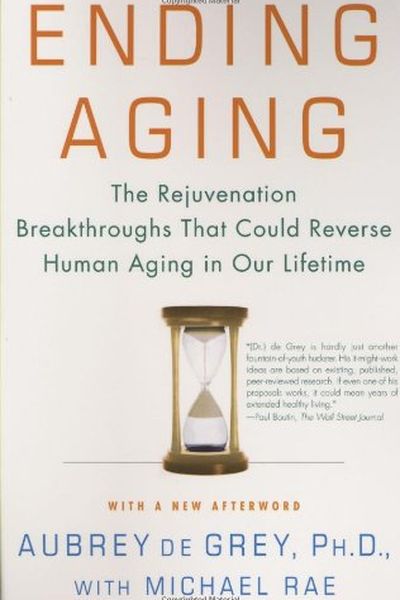
López-Otín et al. — Hallmarks of aging: an expanding universe (Cell, 2023)
The most cited map of the biological processes that drive aging.
- Research programme
NIA Interventions Testing Program
The rigorous mouse studies behind rapamycin, acarbose and other lifespan results.
- Paper
Garmany & Terzic — Global healthspan-lifespan gaps (JAMA Network Open, 2024)
How the gap between living long and living healthy is widening worldwide.
- Research programme
AFAR — The TAME trial
The design of the first trial aimed at aging itself, using a composite of age-related diseases.
Across the fields: learning curves, deployment, and rebound
- Theodore Wright — Factors Affecting the Cost of Airplanes (1936)
The original experience-curve formulation: costs change with accumulated production.
- Kenneth Arrow — The Economic Implications of Learning by Doing (1962)
The economics of productivity improvement through production experience.
- William Stanley Jevons — The Coal Question (1865)
The classic rebound argument: lower effective costs can expand total demand.
- Arnulf Grübler — The costs of the French nuclear scale-up: A case of negative learning by doing (2010)
A counterexample to assuming that greater deployment always lowers costs.