A qubit is a resource. A reliable operation is the product.
A thousand noisy qubits can be worth less than a hundred clean ones. At an error of 10−3, a thousand operations already make failure likely, and a billion make it certain.
Build the physical qubit
A controllable two-level system: a superconducting circuit, an ion, an atom, a photon, or a spin. Its errors are relaxation, dephasing, leakage out of the two levels, and loss.
- Measure
- T₁ and T₂ against gate time, leakage, loss
- Failure boundary
- Materials defects, two-level systems in dielectrics, and noise that is correlated rather than random
What the record shows at this step
- Reported evidence
- 99.9%-class two-qubit operations have been shown on several platforms, and one small device held above 99.9% for 24 days without recalibration.
- Where it is moving
- Better materials, noise bias engineered into the qubit, and intrinsic protection.
- Principal risk
- Materials defects, two-level systems in dielectrics, and noise that is correlated rather than random
Evidence statements describe published experiments and resource estimates. “Where it is moving” is an editorial reading of direction, not an announced capability.
Operate it at scale
Fault tolerance needs record-level performance on every qubit, simultaneously, for hours: not the best pair on the chip, but the worst tail across thousands.
- Measure
- Median and tail two-qubit error under simultaneous operation, calibration uptime
- Failure boundary
- Crosstalk and calibration parameters that grow faster than the number of qubits
What the record shows at this step
- Reported evidence
- Published records usually come from isolated one- and two-qubit devices; errors measured across whole arrays running simultaneously are typically higher.
- Where it is moving
- Automated continuous calibration and fabrication uniform enough that bad qubits are rare.
- Principal risk
- Crosstalk and calibration parameters that grow faster than the number of qubits
Evidence statements describe published experiments and resource estimates. “Where it is moving” is an editorial reading of direction, not an announced capability.
Measure the syndromes
Error correction repeatedly measures parity checks that reveal where errors occurred without revealing the encoded state. Every cycle needs good measurement and reset, not only good gates.
- Measure
- Readout error, reset error, cycle time
- Failure boundary
- Leakage that silently corrupts every check a qubit touches
What the record shows at this step
- Reported evidence
- Superconducting cycles run in about a microsecond; ion and atom cycles take far longer, which sets how deep a computation can be in a day.
- Where it is moving
- Leakage-removal circuits and codes tailored to each platform's dominant errors.
- Principal risk
- Leakage that silently corrupts every check a qubit touches
Evidence statements describe published experiments and resource estimates. “Where it is moving” is an editorial reading of direction, not an announced capability.
Decode in real time
A classical computer must infer the most likely errors from the syndrome stream as fast as it arrives, or a backlog builds and the machine stalls.
- Measure
- Decoder latency and throughput against cycle time
- Failure boundary
- A real-time supercomputing problem at millions of qubits
What the record shows at this step
- Reported evidence
- Willow ran a real-time decoder at distance five with about 63 µs average latency, over runs up to a million cycles.
- Where it is moving
- Parallel, windowed decoders on dedicated hardware.
- Principal risk
- A real-time supercomputing problem at millions of qubits
Evidence statements describe published experiments and resource estimates. “Where it is moving” is an editorial reading of direction, not an announced capability.
Compute with logical qubits
A memory that survives is not a computer. Logical gates between patches, and non-Clifford operations fed by magic states, must also be fault tolerant.
- Measure
- Logical gate error, magic-state output error and rate
- Failure boundary
- Magic-state factories that consume much of the machine
What the record shows at this step
- Reported evidence
- Neutral atoms executed 48 logical CCZ gates using error detection; newer cultivation protocols cut projected factory cost substantially.
- Where it is moving
- Lattice surgery, transversal gates where codes allow them, and cheaper magic states.
- Principal risk
- Magic-state factories that consume much of the machine
Evidence statements describe published experiments and resource estimates. “Where it is moving” is an editorial reading of direction, not an announced capability.
Compile the algorithm
An algorithm becomes a count of logical qubits, operations, and non-Clifford gates. Better arithmetic and representations shrink all three.
- Measure
- Logical qubits, Toffoli or T count, runtime
- Failure boundary
- Classical algorithms improve and move the crossover
What the record shows at this step
- Reported evidence
- RSA-2048 estimates fell from ~20 million physical qubits to under a million under the same hardware assumptions.
- Where it is moving
- Problem-specific algorithms with large, provable advantages.
- Principal risk
- Classical algorithms improve and move the crossover
Evidence statements describe published experiments and resource estimates. “Where it is moving” is an editorial reading of direction, not an announced capability.
Physical errors do not need to reach zero. They need to sit far enough below threshold that each added layer of redundancy buys an exponential gain in reliability.
A computation is only as long as its error rate allows
With independent faults at probability p, a circuit of G operations finishes cleanly with probability of roughly e−pG. The curve falls off a cliff at about 1/p operations, wherever that is. Error correction exists to move the cliff to the right.
At p = 1.4×10⁻³, a 90% chance of finishing allows about 73 operations. That is enough to demonstrate error correction and nowhere near enough to run a useful algorithm.
How the bottleneck climbed the stack
Each era answered one question and exposed the next. None of the answers was a larger qubit count.
Coherence was the question
From the mid-1990s, the problem was whether a quantum state could be prepared, controlled, and read before it thermalised. Transmons and trapped atoms answered it.
Then gate fidelity
Until roughly 2014, two-qubit errors of several percent sat above the surface-code threshold. Pulse shaping, couplers, and materials brought them below 1%.
Then the crossover
Qubits at 99% still produced codes where bigger was worse. Crosstalk, leakage, and drift kept Λ below one until 2023, and clearly above it only in 2024.
Now systems scaling
The question is whether Λ holds while distance, logical count, gate set, cycle count, and machine size grow together, with decoders keeping pace.
What the logical experiments proved, and what they did not
Ratios such as “48 logical from 280 physical” are not efficiency metrics unless the logical error, the allowed post-selection, the gate set, the number of correction rounds, and the circuit depth are all fixed. Without those, the comparison measures vocabulary, not capability.
The discovery chain
The theory arrived in the 1990s. The experiments needed nearly thirty years to reach the regime the theory described.
- 1995
Quantum error correction
Shor showed that a qubit could be protected by encoding it across nine, despite the no-cloning theorem. Steane and others generalised the idea.
- 1996-1999
The threshold theorem
Below a constant physical error rate, arbitrarily long computation is possible with manageable overhead. The field's entire engineering bet rests on this result.
- 1997-2012
The surface code
Kitaev's topological codes became a practical architecture with local checks and a threshold near 1%, the baseline for most resource estimates.
- 2014
Gates at threshold
Superconducting two-qubit gates reached 99.4%, the regime where surface-code fault tolerance first looked plausible.
- 2019
The 20-million-qubit estimate
Gidney and Ekerå costed RSA-2048 at about 20 million noisy qubits for eight hours, making the scale of a useful machine concrete.
- 2023
Bigger finally better
A distance-five surface code beat distance three, barely. Neutral atoms ran circuits on 48 encoded logical qubits.
- 2024
Below threshold
Willow's distance-seven memory reached 0.143% per cycle with Λ = 2.14, outliving its best physical qubit by 2.4 times.
- 2025-2026
The target moves
RSA-2048 estimates fell below a million qubits. Roadmaps began quoting logical qubits and operation counts rather than physical qubits.
Who is building what
The major programmes have begun describing goals in logical qubits and operation counts rather than physical qubits. Search the record, or filter by platform.
Google Quantum AIWillowTransmon surface codes with real-time decoding
- Reported evidence
- A 101-qubit distance-7 memory at 0.143% error per cycle, Λ = 2.14, and a logical lifetime 2.4 times its best physical qubit; real-time decoding at about 63 µs latency at distance 5.
- Announced next step
- Long-lived logical qubits, then logical gates between them.
- Unresolved risk
- Rare correlated events set an error floor in long repetition-code runs; memory is not computation.
IBM QuantumStarling roadmapHigh-rate qLDPC (bivariate bicycle) codes with long-range couplers
- Reported evidence
- Published codes that store 12 logical qubits in 288 physical qubits at thresholds comparable to the surface code, in simulation.
- Announced next step
- 200 logical qubits running 100 million gates in 2029 (announced target).
- Unresolved risk
- Non-local connectivity on a chip is unproven at scale; the code advantage must survive real circuit noise.
AWSOcelotBosonic cat qubits with strongly biased noise
- Reported evidence
- A 2025 chip combining cat qubits with a repetition code for the remaining error type.
- Announced next step
- Lower overhead by suppressing one error type in hardware.
- Unresolved risk
- Bias must be preserved through every gate for the saving to hold.
Quantinuum and MicrosoftH-series trapped ionsAll-to-all connectivity with compact colour and concatenated codes
- Reported evidence
- Logical error rates below physical, with repeated error-correction cycles, on small codes in 2024.
- Announced next step
- Larger logical registers with continuous correction.
- Unresolved risk
- Gate speed: deep circuits take weeks rather than hours, and optics grow with the machine.
Harvard, MIT, and QuEraReconfigurable atom arraysRydberg gates on atoms moved by optical tweezers
- Reported evidence
- Up to 48 encoded logical qubits, 228 logical two-qubit gates and 48 logical CCZ gates in 2023, largely using error detection and post-selection.
- Announced next step
- Hundreds of logical qubits and around a million operations (announced, ‘Megaquop’-class).
- Unresolved risk
- Post-selection hides the failure rate; continuous correction with atom replacement is only beginning.
Atom ComputingAC1000Large neutral-atom arrays with mid-circuit reloading
- Reported evidence
- Over 1,200 physical atoms advertised; a 2026 preprint reported repeated toric-code correction with atom replacement for up to 90 cycles.
- Announced next step
- Logical qubits with Microsoft’s qubit-virtualisation stack.
- Unresolved risk
- Vendor-quoted fidelities; repeated-correction results are a preprint.
PsiQuantumFusion-based photonicsMeasurement-based computing from small entangled photon states
- Reported evidence
- Silicon-photonic components made in a commercial foundry; the architecture tolerates substantial loss per fusion in theory.
- Announced next step
- Utility-scale facilities announced in Brisbane and Chicago.
- Unresolved risk
- No repeated logical demonstration yet comparable with matter-qubit results; loss compounds through every component.
Diraq, imec, and IntelSilicon spin qubitsQuantum dots made on 300 mm CMOS lines
- Reported evidence
- Two-qubit fidelities above 99% in foundry-fabricated devices.
- Announced next step
- Dense arrays with cryogenic control electronics.
- Unresolved risk
- Device variability and wiring millions of dots within a millikelvin heat budget.
Microsoft Station QMajorana parity readoutTopologically protected qubits from superconductor-semiconductor wires
- Reported evidence
- A 2025 single-shot parity measurement with ~1% assignment error and millisecond dwell times.
- Announced next step
- A measurement-only topological qubit.
- Unresolved risk
- The paper states the readout does not by itself distinguish topological modes from trivial states.
Algorithm and resource-estimation researchGidney, Ekerå, Beverland and othersCompiling algorithms down to physical qubits and seconds
- Reported evidence
- RSA-2048 fell from ~20 million physical qubits (2019) to under a million (2025) under the same physical assumptions.
- Announced next step
- Lower-cost chemistry and materials algorithms.
- Unresolved risk
- Improving classical algorithms can move the crossover after an estimate is published.
NISTPost-quantum cryptographyStandardised replacement public-key algorithms
- Reported evidence
- First post-quantum standards finalised in 2024.
- Announced next step
- Migration before a cryptographically relevant machine exists.
- Unresolved risk
- Migration of long-lived systems takes a decade regardless of the quantum timeline.
DARPAQuantum Benchmarking InitiativeIndependent verification of utility-scale claims
- Reported evidence
- A government programme evaluating whether proposed architectures can reach useful fault tolerance.
- Announced next step
- Separating credible utility-scale roadmaps from announcements.
- Unresolved risk
- Evaluation is not demonstration; the machines still have to be built.
Roadmap targets, such as IBM’s 200 logical qubits and 100 million gates in 2029, are company announcements, not results. Vendor-quoted fidelities are reproduced as stated.
Width, length, and the redundancy that carries them
Application cost is roughly logical qubits × logical operations × error-correction overhead. The third term is where Λ, codes, and factories live, and where the largest recent savings came from.
How many physical qubits does an answer need?
Logical qubits set the width. Error-correction rounds set the length. The suppression factor Λ decides how much redundancy each logical qubit needs to survive the whole run.
Distance 33 surface code, 2,177 qubits per logical patch
- Logical error budget
- 5.8×10⁻¹⁶ per qubit-round
- Data and syndrome qubits
- 13m
- Factories and routing
- 13m
- Physical per logical
- 4,354 : 1
The RSA scenario uses the assumptions of Gidney and Ekerå (2019): 10⁻³ physical error against a roughly 1% threshold, which is a Λ of about 10, and a 1 µs cycle. This model lands in the same tens-of-millions range as their ~20 million qubits. Drop Λ to the measured 2.14 and the same computation needs several times more.
Calculation & assumptions
Logical error per qubit-round starts from Willow’s measured 1.43×10⁻³ at d = 7 and falls by a factor of Λ for every increase of two in distance: pL ≈ 1.43×10⁻³ · Λ−(d−7)/2. The budget gives the whole run a 90% chance of success: pL ≤ 0.105 ÷ (logical qubits × rounds). Each logical qubit is one rotated surface-code patch of 2d² − 1 physical qubits; factories and routing are added as a share of the total.
What this model cannot capture is the lever that mattered most recently. Gidney’s 2025 estimate cut RSA-2048 to under a million qubits under the same physical assumptions by redesigning the arithmetic and replacing much of magic-state distillation with cultivation, trading qubits for a longer runtime of under a week.
What pushes the curve down next
Better physical operations
Because suppression compounds through the code, a modest fall in physical error removes thousands of qubits per logical qubit at useful targets.
Condition: improvements in the tail across whole arrays, not only record pairsHigher-rate codes
qLDPC codes store many logical qubits in a shared block, with simulated overhead up to ten times lower than the surface code.
Condition: non-local connectivity that can be built and survives real noiseCheaper magic states
Cultivation and native non-Clifford operations shrink the factories that dominate many estimates.
Condition: output fidelity and rate demonstrated in hardware, not only in simulationBetter algorithms
Chemistry estimates fell by orders of magnitude through qubitisation and better Hamiltonian representations; the RSA estimate fell twentyfold.
Condition: advantages large enough to survive improving classical methodsThe remaining constraints appear only after the easy errors are gone
Suppressing ordinary errors exposes rarer ones. Most of what now limits the curve is invisible in a one- or two-qubit benchmark.
Correlated errors
Surface-code scaling assumes faults are local and independent. Radiation strikes and common-mode disturbances hit many qubits at once; long repetition-code runs already show a floor from rare events.
Leakage
A qubit that leaves its two computational levels is not a simple bit flip. It persists and contaminates its neighbours' checks, and removing it costs extra circuit depth.
Real-time decoding
At microsecond cycles across millions of qubits, the syndrome stream is enormous. Decoders must keep up indefinitely and answer before latency-sensitive logical operations.
Wiring and heat
A dilution refrigerator has microwatts of cooling at its coldest stage. Tens of thousands of control lines, or cryogenic electronics to replace them, strain that budget.
Magic-state throughput
Non-Clifford gates need purified ancilla states. Factories producing them can dominate the machine's area and set its speed.
The moving classical baseline
Better tensor networks, Monte Carlo methods, and GPUs keep reclaiming claimed advantages. A polynomial quantum speedup with large constants is especially exposed.
An optimistic view, with conditions
Quantum computing has become an engineering problem, mostly
Quantum computers do not need perfect qubits. They need an operating regime in which every added layer of redundancy makes the logical machine more reliable. That regime now exists in hardware. Lower physical error, better codes, faster decoders, cheaper magic states, and better algorithms multiply rather than add, and several of them are improving at once.
The scaling test
Λ held or rising at distance 9 and 11 without a new floor; a logical two-qubit gate with lower error than the physical gate; decoders that keep pace for more than 105 cycles.
The megaquop machine
Tens to hundreds of logical qubits running about a million reliable operations, with continuous magic-state production: the first scientifically useful fault-tolerant regime.
Beating the best classical answer
108 to 109 reliable operations on a chemistry or materials problem, at a total cost below the best classical alternative. That is the only finish line that pays for the machine.
View the annual scorecard
| Metric | Record through September 2026 | What a good curve looks like |
|---|---|---|
| Suppression factor Λ | 2.14 ± 0.02 at d = 3-7 (superconducting) | ≥ 3-4 sustained at d = 9 and 11 |
| Logical memory error | 1.43×10⁻³ per cycle at d = 7 | Falling by orders of magnitude, not percentages |
| Logical gate error | Early; mostly detection-based | Below the physical two-qubit error, then 10⁻⁵ and beyond |
| Simultaneous two-qubit error | ~1.4-5×10⁻³ across leading arrays | ≤ 5×10⁻⁴ across more than 500 qubits |
| Reliable logical operations | ~10²-10⁴ in demonstrations | 10⁶ (megaquop), then 10⁸-10⁹ |
| Real-time decoding | ~63 µs latency at d = 5 | Sustained with margin at d ≥ 9 |
| Correlated burst rate | Visible as a floor in long repetition-code runs | Falling as systems grow |
Baselines are reported results. Targets are editorial intermediate goals derived from published resource estimates, not company guidance.
There is more than one finish line
- Below thresholdA larger code gives a lower logical error. Demonstrated for memory.
- Beyond breakevenA logical gate outperforms the physical gate it is built from.
- Universal and continuousClifford and non-Clifford logical gates run with ongoing correction and no discarded runs.
- MegaquopAbout a million reliable logical operations in one computation.
- GigaquopAbout a billion: the scale of the chemistry and cryptanalysis estimates.
- UsefulAn answer cheaper, faster, or otherwise unobtainable against the best classical method.
Sources, method, and boundaries
Measured points in Figure 1 are reported results. Extrapolations in Figures 1 and 4 and the reliability curves in Figure 3 are editorial calculations with simplified independent-fault models, stated so their assumptions are visible; they are not resource estimates. Resource estimates quoted in the text are from the cited literature and depend on their stated physical error, cycle time, connectivity, and code. Company roadmaps are targets, not evidence.
- Physical qubit
- An individual two-level quantum system used to carry information.
- Logical qubit
- Information encoded across many physical qubits so that errors can be detected and corrected without measuring it.
- Code distance
- Roughly, the smallest number of physical faults that can cause an undetected logical error. A surface-code patch uses about 2d² physical qubits.
- Suppression factor Λ
- The ratio of logical error at distance d to that at d + 2. Above one, larger codes help.
Read More
The 20 books most relevant to this report, drawn from the reading lists of people worth listening to, via TopBooks.
 Noson S. YanofskyNoson S. YanofskyRecommended by Mark Russinovich
 Quantum PhysicsMichael G. RaymerRecommended by Mark Russinovich
 InformationHans Christian von BaeyerRecommended by Nassim Nicholas Taleb
 Quantum Processes Systems, and InformationBenjamin SchumacherRecommended by Sean Carroll
 Quantum Computing Since DemocritusScott AaronsonRecommended by Emmett Shear, Patrick Collison
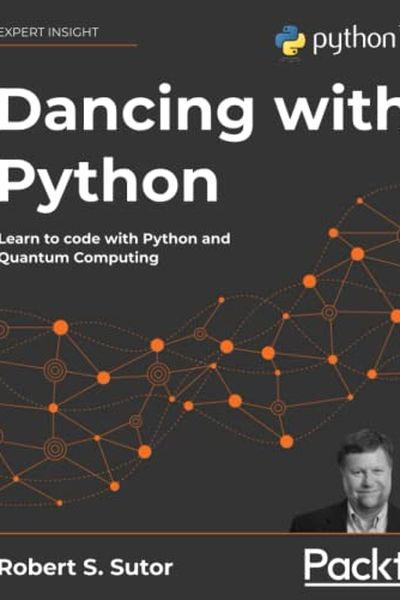 Dancing with PythonRobert S. SutorRecommended by Kirk Borne
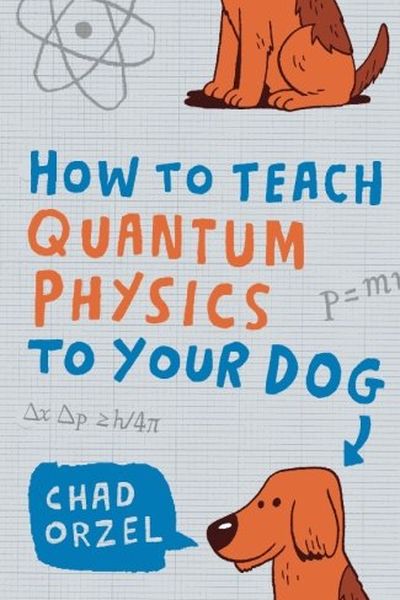 How to Teach Quantum Physics to Your DogOrzelRecommended by Mark Russinovich
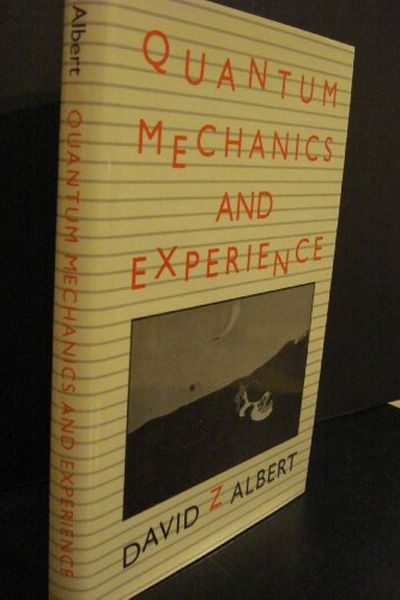 Quantum Mechanics and ExperienceDavid Z AlbertRecommended by Sean Carroll
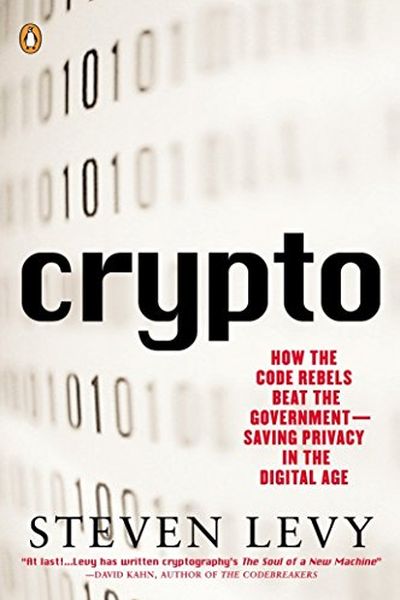 CryptoSteven LevyRecommended by Linda Xie
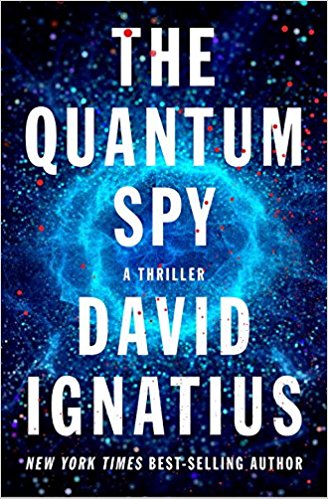 The Quantum Spy: A ThrillerDavid IgnatiusRecommended by Andrew Liveris
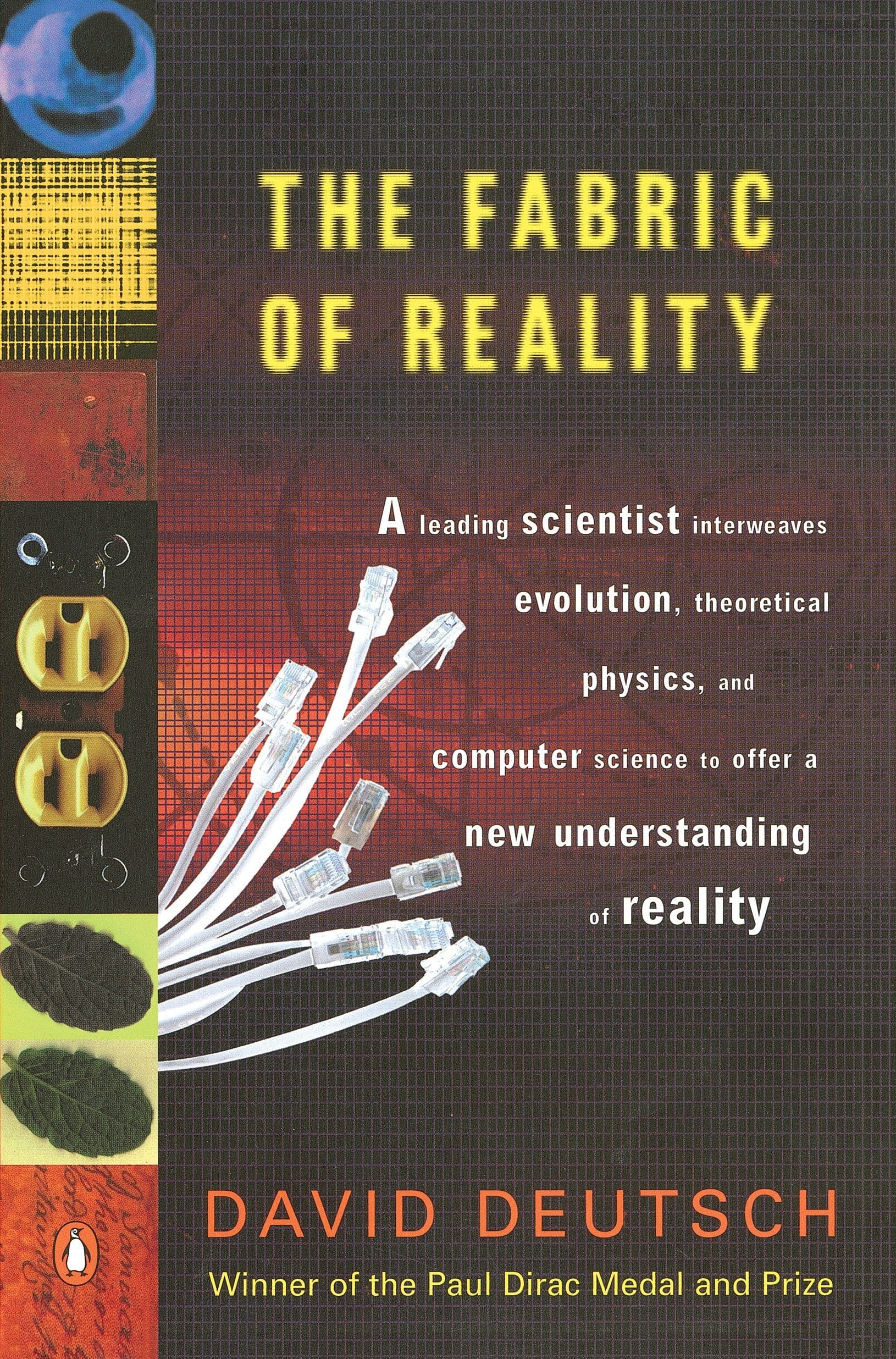 The Fabric of RealityDavid DeutschRecommended by Chris Anderson, Naval Ravikant +2
 Something Deeply HiddenSean CarrollRecommended by Brian Greene, Dallas Campbell +9
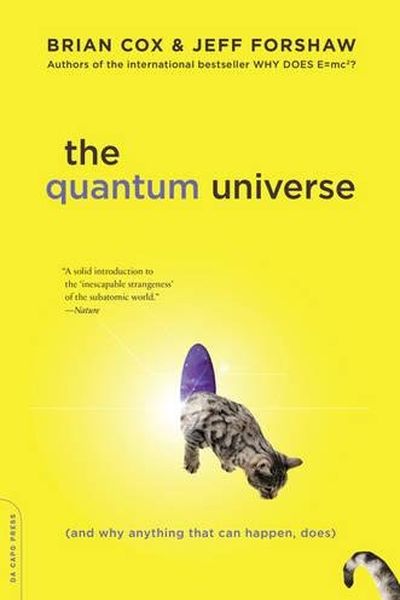 The Quantum UniverseBrian CoxRecommended by Mark Russinovich
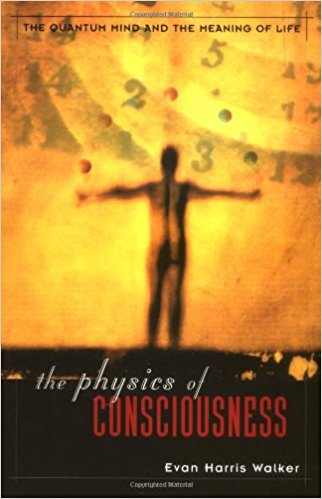 The Physics Of Consciousness: The Quantum Mind And The Meaning Of LifeEvan Harris WalkerRecommended by Ari Iaccarino
 Quantum QuestionsKen WilberRecommended by Josh Waitzkin
 What is RealAdam BeckerRecommended by Brian Cox, Ken Nakamura
 The Emergent MultiverseDavid WallaceRecommended by David Deutsch, Sean Carroll
 The Man from the FutureAnanyo BhattacharyaRecommended by Steven Sinofsky
 The Quantum LabyrinthPaul HalpernRecommended by K Ken Nakamura
 Bitcoin and Cryptocurrency TechnologiesArvind Narayanan, Joseph Bonneau, Edward Felten, Andrew Miller, Steven GoldfederRecommended by Antonio Eram, Tai Lopez